Why an Oil Change Visit Is a Good Time To Check the Whole Car
July 31, 2026
An oil change appointment may begin with the engine, but it creates a valuable opportunity to check much more than the oil and filter. With the vehicle already in the shop and often raised on a lift, a technician can see areas that are difficult for drivers to examine at home.
Small leaks, tire damage, brake wear, and aging belts may not trigger a warning light right away. Finding these concerns during regular maintenance gives you time to plan service before a worn part leads to a breakdown or damages another system.
Fresh Oil And A New Filter Protect The Engine
Engine oil lubricates bearings, camshafts, pistons, timing parts, and other moving components. It also helps remove heat and carries small particles toward the oil filter. Over time, heat, fuel, moisture, and combustion byproducts reduce the oil’s ability to protect the engine.
The filter collects contamination as the oil circulates. If it becomes heavily restricted, a bypass valve may allow oil to continue flowing without full filtration. Replacing the oil and filter together helps restore lubrication and removes debris that would otherwise remain in the system.
The correct oil is important too. Modern engines may require a specific viscosity and manufacturer approval for turbocharger protection, timing system operation, fuel economy, or emissions compatibility. Using a product that only matches the viscosity may not satisfy every requirement.
Fluid Levels Can Reveal Developing Leaks
An oil change visit is a convenient time to check other accessible fluids. A low reservoir may indicate an overdue service, normal component wear, or a leak that needs further attention.
- Engine coolant
- Brake fluid
- Transmission fluid where accessible
- Power steering fluid on equipped vehicles
- Windshield washer fluid
- Clutch fluid on applicable vehicles
Coolant and brake fluid should not need to be topped off repeatedly. Coolant loss may come from a hose, radiator, water pump, reservoir, or plastic housing. A low brake fluid level can reflect worn pads or a hydraulic leak. Finding the source is more useful than simply adding fluid at every visit.
Tires Can Be Checked For Wear And Damage
Tire pressure affects braking, steering response, fuel use, and tread life. A technician can adjust pressure to the value listed on the vehicle placard and check whether one tire is losing air faster than the others.
The tread can also reveal problems elsewhere in the vehicle. Wear concentrated along one edge may point toward an alignment concern, while cupping can be associated with weak shocks, worn suspension parts, or wheel balance trouble. Cuts, bulges, exposed cords, embedded objects, and aging sidewalls may require attention even when the tire still holds air.
Catching a wear pattern early can help preserve the remaining tread. Replacing tires without correcting a suspension or alignment problem may allow the new set to develop the same damage.
Brake Wear May Be Visible Before Grinding Begins
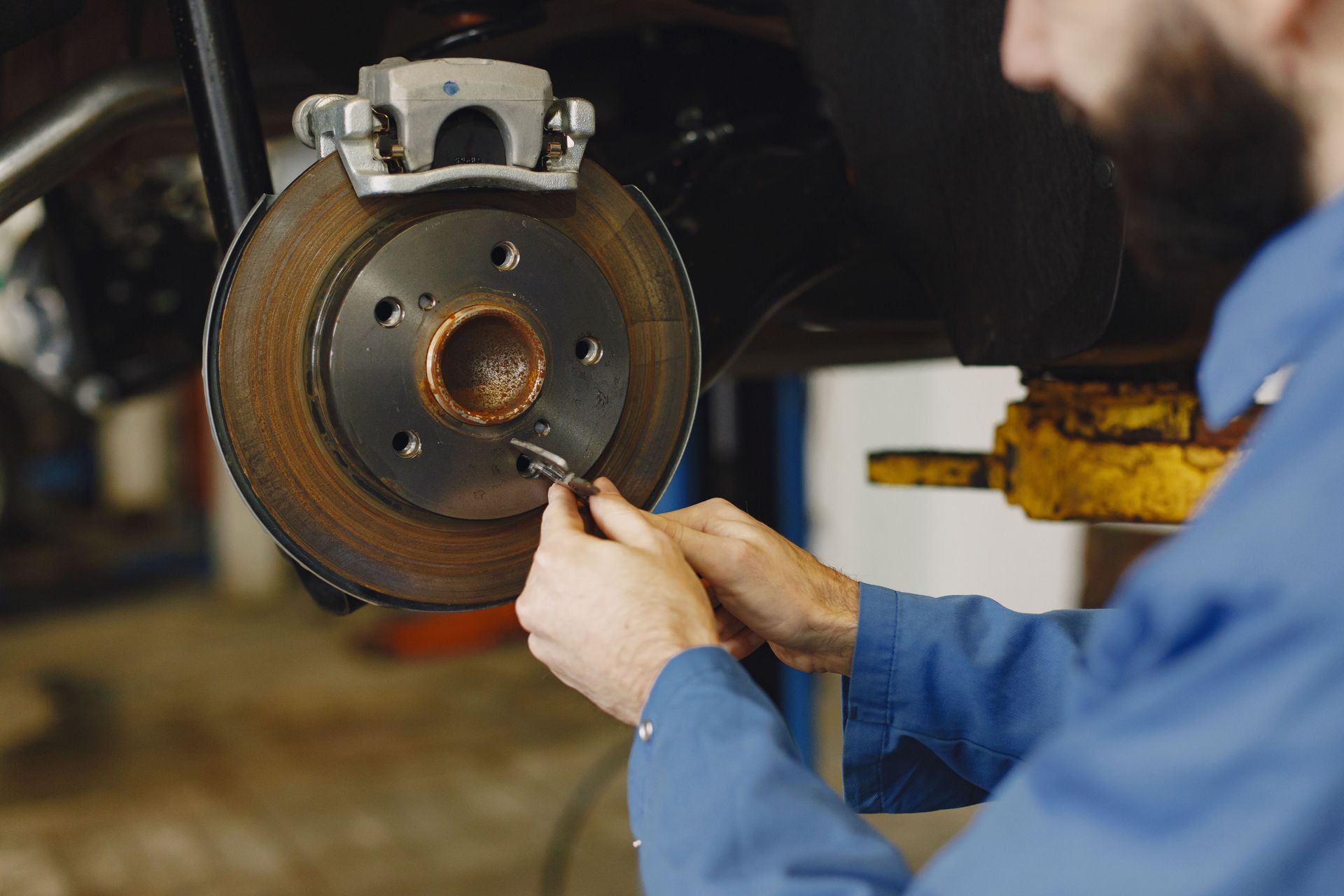
Depending on the wheel design, a technician may be able to see part of the brake pad and rotor during the visit. If the wheels are removed for rotation, the inner and outer pads can be measured more accurately and compared for uneven wear.
One thin pad may indicate a sticking caliper, seized slide pin, restricted hose, or damaged hardware. Rotors can also develop grooves, heat spots, rust damage, or thickness variation that causes vibration during braking. Addressing wear before metal contacts the rotor may keep the repair from becoming more involved.
Tell the shop about squealing, pulling, pedal pulsation, a burning odor, or a pedal that feels different. Those details help the technician decide whether the vehicle needs a more complete brake inspection.
Leaks And Underbody Damage Can Be Spotted
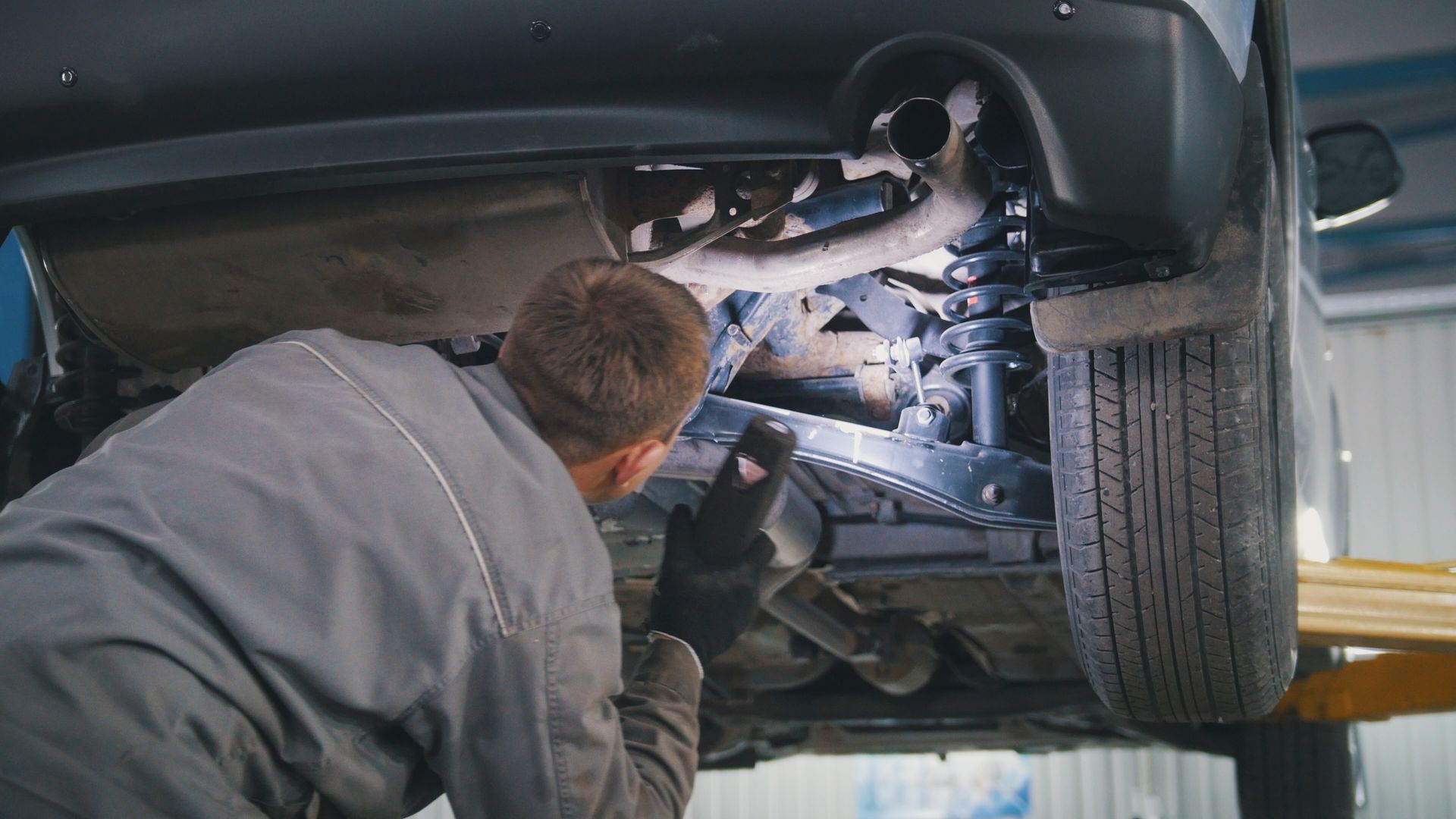
With the vehicle raised, the technician can look around the oil pan, drain plug, filter housing, valve covers, timing cover, transmission, and drivetrain seals. Fresh wetness or active dripping may reveal a leak before the fluid level becomes dangerously low.
The same view may expose torn axle boots, loose exhaust parts, damaged splash shields, cracked bushings, or rusted components. A small seep may only need monitoring, while fluid reaching a belt, hot exhaust part, or electrical connection may require quicker action.
Not every stain means a major repair. Cleaning the area and checking it again later can help determine how quickly the leak is progressing and where it begins.
Belts, Hoses, And The Battery Deserve Attention
Drive belts operate parts such as the alternator, water pump, and A/C compressor, depending on the engine. Frayed edges, cracking, glazing, contamination, or tensioner noise can indicate that the belt system is nearing the end of its useful life.
Cooling hoses should be checked for swelling, soft spots, brittleness, and dried residue near their connections. Battery terminals can also be examined for corrosion or looseness. If the engine has begun cranking slowly, a battery and charging system test may help identify weakening capacity before the vehicle refuses to start.
What The Technician Finds Helps You Plan Ahead
A whole-car check does not mean every worn item must be replaced immediately. The shop should explain which findings affect safety, which could cause additional damage, and which can be watched until a future appointment.
Measurements and test results make that conversation clearer. Brake pad thickness, tire tread depth, battery condition, and fluid levels provide useful reference points for later visits. Tracking changes over time helps you avoid being surprised by several overdue repairs at once.
Get Full-Service Oil Change Care In Falls Church, VA, With Pimmit Hills Sunoco
Pimmit Hills Sunoco in Falls Church, VA, can replace your engine oil and filter, confirm the correct specification, and check fluids, tires, brakes, leaks, belts, hoses, and other visible components.
Contact us to schedule an oil change visit that gives your whole vehicle the attention it needs.